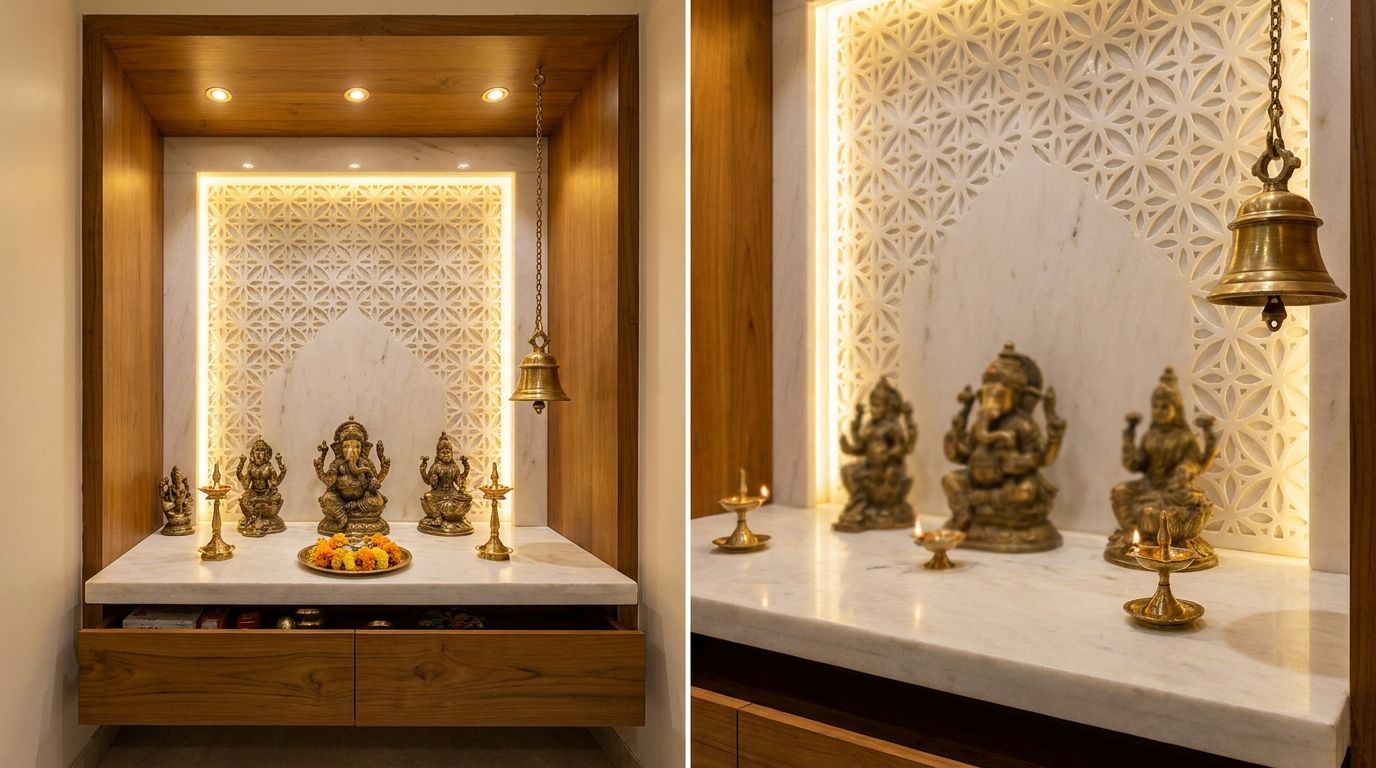
Whether it's a full room in a bungalow or a 2-ft niche in a 2 BHK, the pooja space sets the tone for the whole home. The best designs balance three things: Vastu placement, easy daily use, and materials that survive diya and agarbatti smoke. This guide covers placement, sizes, materials, lighting, storage and the ventilation detail everyone forgets — with costs for every budget and designs from wall-mounted units to full rooms.
Placement: the traditional rules, applied to real flats
The north-east (Ishan) corner is the classic position, with the worshipper facing east. In apartments where that corner is occupied, the accepted order of fallbacks: an east-facing unit anywhere in the north or east zones, then a north-facing one. Avoid placing the mandir against a bathroom wall, under a staircase, inside a bedroom (if any alternative exists), or directly facing the main door. A living-room unit in the right zone is a fully respectable modern answer — see the whole-home logic in our Vastu layouts guide.
Formats and sizes, by home type
| Format | Footprint | Best for | Cost (indicative) |
|---|---|---|---|
| Wall-mounted unit | 2×2 ft | 1–2 BHK, rentals | ₹8,000–30,000 |
| Full-height niche/unit | 3×3 ft | Standard apartments | ₹40,000–90,000 |
| Corner mandir tower | 2.5 ft dia | Living-room corners | ₹25,000–60,000 |
| Dedicated room | 4×5 ft+ | Villas, joint families | ₹80,000–1.5L+ |
Working heights that make daily use comfortable: deity shelf at 30–36 in (75–90 cm) so idols meet a seated worshipper's eye line; standing-use shelf at 40–48 in; bell hung where a standing adult reaches naturally.
Materials that survive daily rituals
- Back panel & base: white marble or Corian-type solid surface — oil, kumkum and water wipe off; laminate stains and lifts at edges.
- Structure: teak or sheesham traditionally; marine ply with teak veneer gives 90% of the look at half the price.
- The jaali backdrop: CNC-cut MDF (painted) from ₹250–500/sq ft, PVC jaali cheaper still, real Corian/marble jaali for premium builds — backlit, it's the signature modern-mandir look.
- Avoid: wallpaper behind diyas (heat + oil), high-gloss laminates (every drop of oil shows), carpet flooring in a dedicated room (agarbatti ash).

Our picks for this room
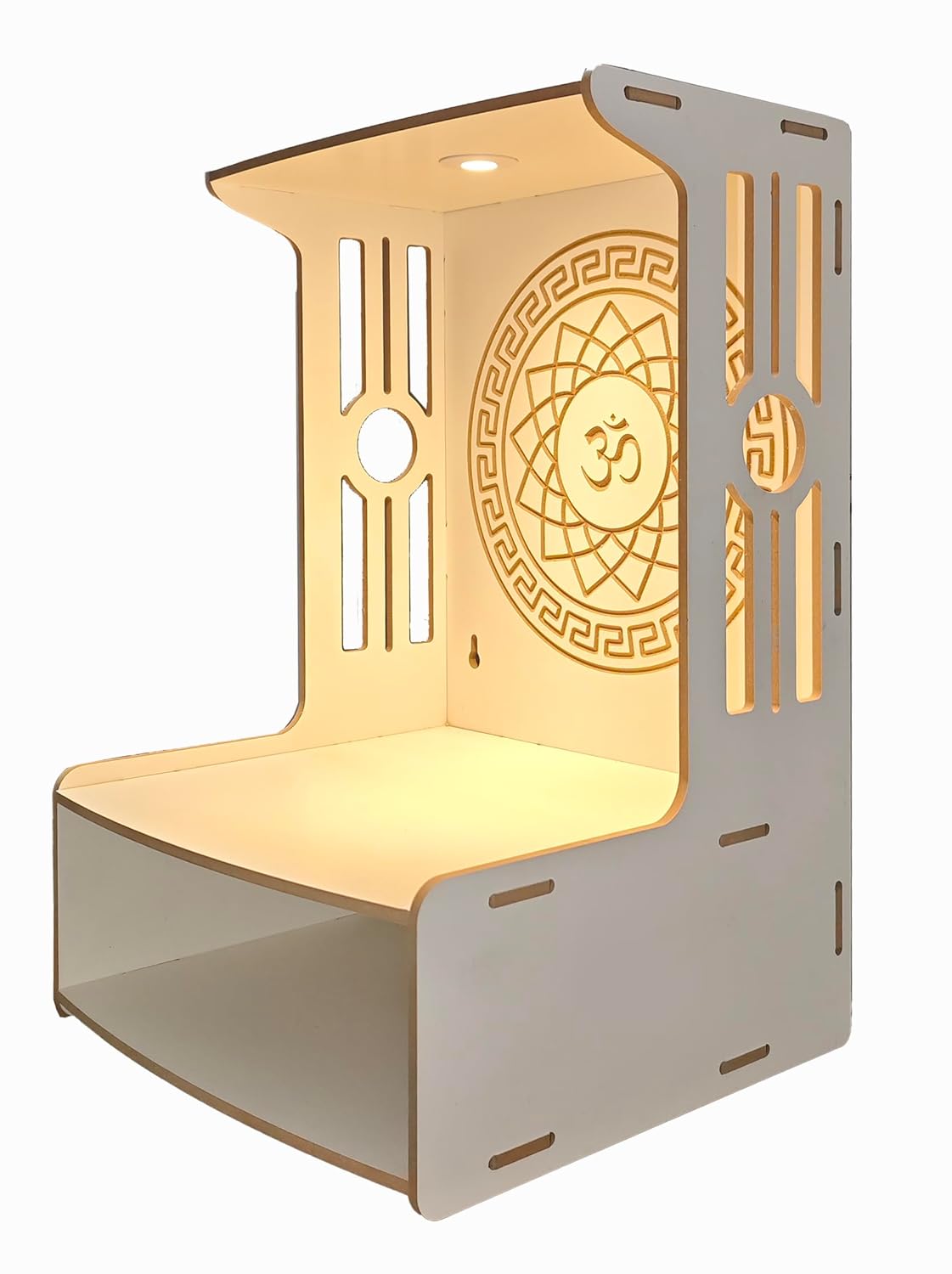
As an Amazon Associate, Interior Decor Designs earns from qualifying purchases. The price you pay is unaffected.
Lighting: the temple glow, done with LEDs
- One warm spotlight (2700K, 3–5W) aimed at the deity shelf — the anchor light.
- Backlit jaali or halo panel behind the deities — the modern glow that photographs so well (₹1,500–5,000 in strip + diffuser).
- A low-wattage always-on option — many homes like a 0.5W warm night lamp so the mandir is never fully dark.
- Skip colour-changing strips and cool-white anything — 4000K+ turns marble blue and serenity clinical.
Storage and the ventilation detail everyone forgets
Plan a drawer or two below the shelf: agarbatti, matchboxes, cotton wicks, oil, pooja books, the festival items that otherwise colonise the kitchen. A pull-out tray for the diya plate keeps hot items off the marble edge.
Ventilation is the make-or-break detail: daily diya and incense smoke needs somewhere to go, or within a year the ceiling above blackens and the jaali yellows. A nearby openable window, a discreet 4-inch exhaust, or simply generous clearance above the flame zone (no shelf directly over the diya) — plan one of the three. In enclosed units, leave the top 6 inches open or grilled rather than sealed.
Etiquette details worth building in
- A small ledge or hook outside the niche for slippers-off, if you keep a dedicated room
- Idol count and size guidance varies by tradition — build ONE generous shelf rather than many tiny ones, and let the family arrange
- A power point inside the unit (for the electric diya during travel, and festival lighting) — nearly free during wiring, annoying later
- If the unit has shutters, prefer glass or jaali fronts — closed solid shutters on a mandir read like a cupboard
Frequently asked questions
Which direction is best for a pooja room?
North-east is the traditional ideal, with the worshipper facing east. Where that's impossible, an east-facing unit in the north or east zone is the accepted apartment compromise.
How much does a pooja unit cost in India?
Wall-mounted units run ₹8,000–30,000; a full-height marble-and-wood niche ₹40,000–90,000; dedicated rooms ₹80,000–1.5 lakh+ (2026 indicative, design-dependent).
Can a pooja mandir be placed in the living room?
Yes — it's the standard modern solution. Place it in the north-east portion of the room, slightly elevated, not directly facing the main door, with its own warm light.
Which material is best for a pooja room?
Marble or solid-surface backs and bases (oil and kumkum wipe clean), teak or teak-veneer structure, and a backlit jaali panel for the glow. Avoid laminates in the flame zone.
What lighting suits a pooja room?
Warm 2700K only: one spotlight on the deity shelf, a backlit panel behind, and optionally a tiny always-on night lamp. Avoid cool white and colour-changing strips.
How do I stop the ceiling above the mandir turning black?
Ventilation and clearance: no shelf directly above the diya, an openable window or small exhaust nearby, and the unit's top left open or grilled. Soot is a ventilation problem, not a cleaning problem.