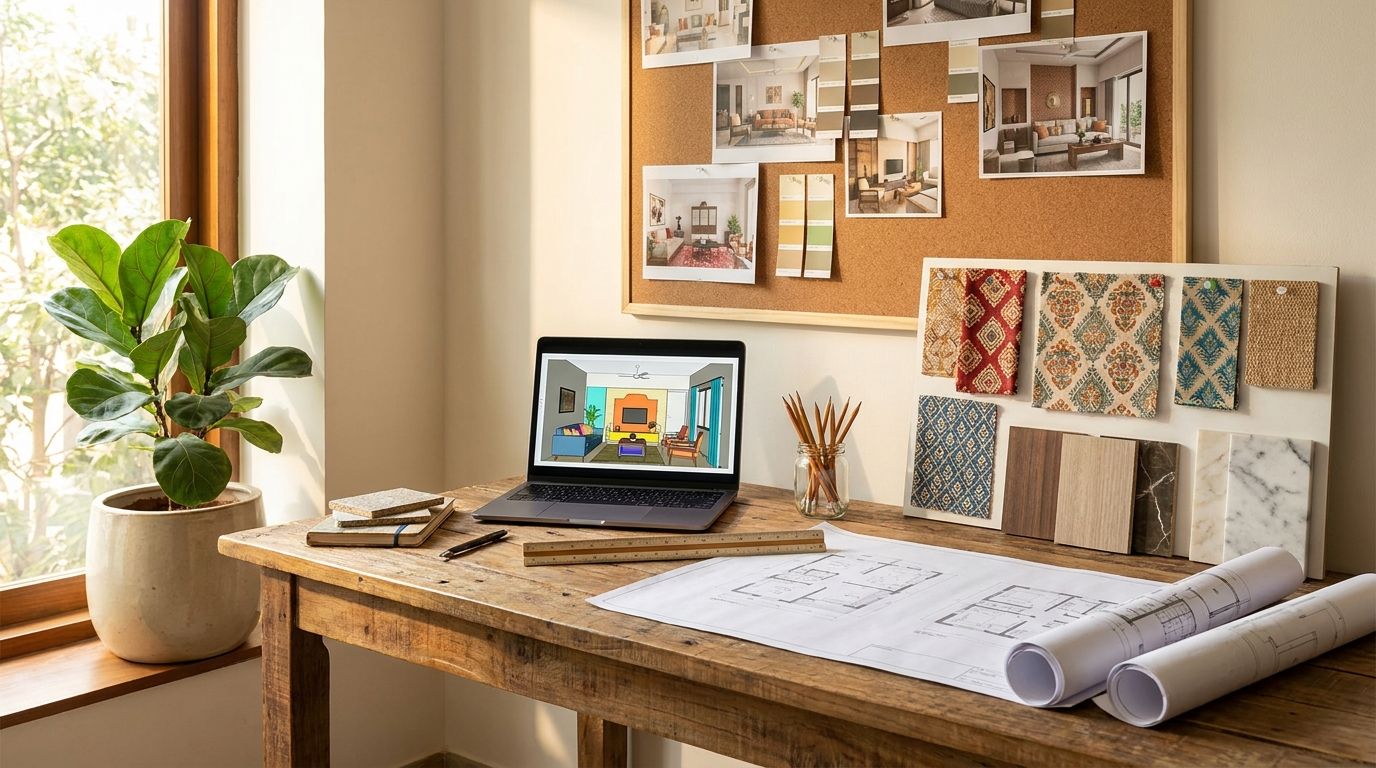
Interior design in India is booming — real estate, home-buyer aspirations and social media have turned it into one of the most-searched creative careers. But most advice online is written by institutes selling courses. Here's the realistic picture: the three entry routes with honest costs, what you'll actually earn at each stage, the skills that get you hired (they're not what colleges emphasise), and the path from first job to independent practice.
The three entry routes, honestly compared
| Route | Duration | Fees (indicative) | Best for |
|---|---|---|---|
| B.Des / B.Arch | 3–5 years | ₹4–12L total | Full-time career, larger firms, depth |
| Diploma | 1–2 years | ₹1–4L | Career switchers with focus |
| Certificate + apprenticeship | 6–12 months | Under ₹1L | Testing the field, portfolio-first people |
The uncomfortable truth institutes won't say: clients hire portfolios and site competence, not certificates. The degree buys structured learning and firm-job eligibility; the apprenticeship buys reality. The strongest juniors we see did both — any credential PLUS a year on live sites.
What you'll actually earn (2026, indicative)
| Stage | Monthly reality |
|---|---|
| Fresher at a firm (metro) | ₹15,000–35,000 |
| 3–5 years + portfolio | ₹50,000–1,00,000 |
| Senior / team lead | ₹1–2L |
| Independent (per 2 BHK project) | ₹1.5–4L design fees |
Independence is where the economics change: at ₹50–200/sq ft design fees, two simultaneous 2 BHKs out-earn most salaried seniors — which is why the experienced eventually leave firms. The catch: you're now also the salesperson, accountant and complaint desk.
Skills that actually get you hired
- Software floor: AutoCAD (drawings are the job), SketchUp (fast 3D), one render engine (V-Ray/Lumion/Enscape). Learn Excel properly — BOQs run the business.
- Site literacy — the real differentiator: plumbing and electrical sequences, carpentry joints, material grades, why the false ceiling comes after wiring. Designers who understand execution get client-facing roles; pure visualisers stay juniors. Everything in our renovation sequence guide is, frankly, junior-designer syllabus.
- Costing fluency: quote a wardrobe per sq ft, know current ply/laminate/hardware rates, read a contractor's quotation for padding.
- Client communication: translating "something elegant" into decisions, presenting three options without drowning people, writing scope emails that prevent disputes.
From our shop
How to Become an Interior Designer in India: The Honest Career Guide
₹299 ₹999 70% off · instant PDF download
The portfolio that opens doors
Before anyone pays you: redesign three real spaces (your home, relatives') end to end — measured drawings, layout options, 3D views, material boards WITH real costs. Document one actual execution, however small; photos of a real built corner beat ten renders. Put it on Behance + a tight Instagram. Firms interview the portfolio, not the CV.
From first job to first clients
- Years 0–2: join a firm that puts juniors ON SITE (ask this in the interview — studios that never send juniors to site teach half the job).
- Years 2–3: own small projects end to end; build vendor relationships (they follow you into independence).
- First independent clients: family and friends' projects done diligently and photographed professionally; a Google Business profile; every completed project's client asked for two referrals. Referrals compound — this industry runs on trust, not ads.
- Charge properly from day one: free design "for exposure" attracts clients who value design at exactly that price.
Frequently asked questions
What is the salary of an interior designer in India?
Freshers earn ₹15,000–35,000/month at firms in 2026 (indicative); with 3–5 years and a portfolio, ₹50,000–1 lakh; independent designers bill ₹1.5–4 lakh in design fees per residential project.
Can I become an interior designer without a degree?
Yes — a diploma or certificate plus 1–2 years apprenticing under a practising designer is a recognised route. Clients hire portfolios and site competence; firms are more degree-conscious.
Which course is best for interior design in India?
A B.Des in Interior Design from strong institutes (NID, NIFT, CEPT and reputed private universities) for the full path; 1–2 year diplomas from credible institutes serve career switchers well.
What software should an interior designer learn?
AutoCAD, SketchUp and one render engine (V-Ray/Lumion/Enscape) as the floor, plus Excel for BOQs and costing — the unglamorous skill that runs real studios.
How do interior designers charge clients?
Per sq ft (₹50–200), percentage of project cost (5–10%), or lump-sum design packages — plus supervision either included or per visit. Independent fees for a 2 BHK typically total ₹1.5–4 lakh.
Is interior design a good career in India?
Demand is real and growing with real estate and renovation cycles; incomes reward the site-literate and client-fluent. The first two years pay poorly — treat them as paid education and the curve steepens fast.