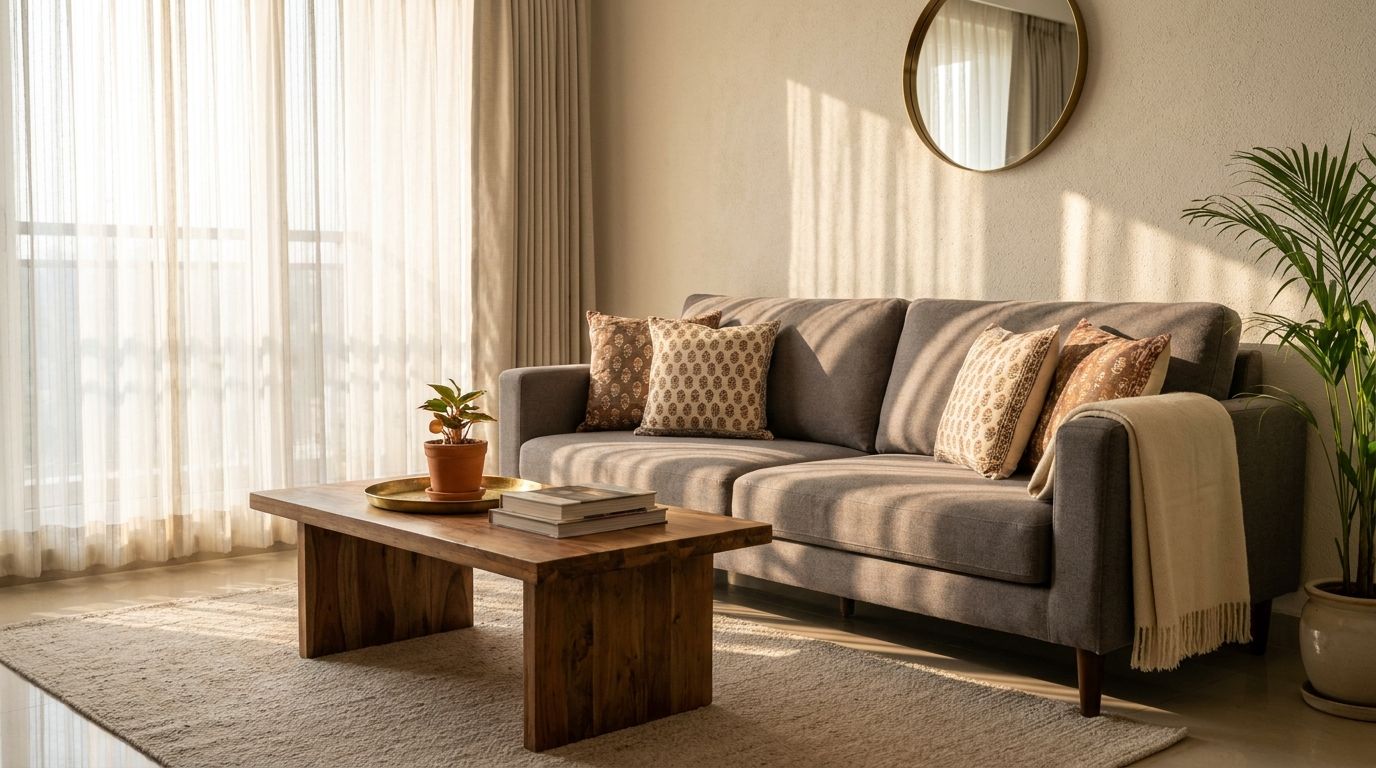
A sofa is the single most expensive decision most people make about their living room, and also the one they research least — usually a Saturday showroom visit, a colour that "looked nice," and a price that felt fine at the time. That's how homes end up with a sofa that sags in 18 months, an L-shape that blocks the balcony door, or a fabric that's grey with dust by the first Diwali. None of this is bad luck — sofas fail for the same handful of reasons every time, and every one of them is checkable before you pay a rupee. This guide covers exactly what to check.
1. Fabric or leatherette — decide this first, everything else follows
Every other choice on this page — colour, cost, cleaning routine — sits downstream of this one call. There's no universally "better" option, only a better fit for your household.
| Fabric | Leatherette / rexine | |
|---|---|---|
| Feel | Warmer, softer, sinks in more | Cool to touch, firmer sit |
| Indian summer | Breathes better, no sticking | Can feel sticky/hot without a fan or AC |
| Stains & spills | Absorbs — needs a fabric protector spray | Wipes off in seconds |
| Pets & kids | Claws snag, crayon stains sink in | Claws can nick the surface too, but wipes clean |
| Lifespan | 7–10 years with good foam | 4–6 years — cracks and peels with UV and dry heat |
| ₹/3-seater | ₹18,000–₹90,000+ | ₹15,000–₹55,000 |
The honest recommendation for most Indian living rooms: fabric for the main sofa, since it's used daily and comfort compounds over a decade — and leatherette is the smarter call for a heavily used recliner or accent chair near a balcony door or in a high-traffic corridor flat, where wipe-clean matters more than plushness. If you're set on leatherette for the main sofa, keep it out of direct west-facing sun — that's what ages it fastest, not the wear.
2. The foam decides how it feels in year three, not day one
Every sofa feels good in the showroom. The difference shows up 18 months in, and it's almost entirely down to foam density, which showrooms rarely volunteer unless you ask directly.
- Below 28 density: cheap PU foam. Comfortable for the first few months, then flattens permanently — you'll feel the wooden frame under the cushion within a year. Common in budget sets under ₹20,000.
- 32–36 density (the number to ask for): the standard for a sofa that holds its shape for 8–10 years of daily sitting. This is where most mid-range branded sofas sit.
- High-resilience (HR) foam, 40+ density: premium seating, noticeably firmer initial sit, holds shape the longest. Worth it for a recliner or a sofa that will see very heavy daily use.
3. Sizing it to the room, not the showroom floor
A sofa that looked proportionate in a 3,000 sq ft showroom can swallow a 10×12 ft living room whole. Match the seating format to your actual wall length before you fall for a shape.
| Format | Wall length needed | Best for |
|---|---|---|
| 2-seater | 1.5–1.7 m | Study nook, small bedroom seating |
| 3-seater | 2.0–2.2 m | Most 1 BHK and compact 2 BHK living rooms |
| 3-seater + 1 armchair | 2.7–3.0 m (L-shaped wall) | Typical 2 BHK — same seating as an L-shape, more open floor |
| L-shape (5–6 seater) | 3.0–3.5 m combined | 3 BHK+, open-plan living-dining |
| Recliner (1-seater) | 0.9–1.0 m, plus 0.6 m reclined depth | TV-facing corner with wall clearance behind |
The L-shape is the most over-bought format in Indian homes — it photographs well online but eats the exact corner most 2 BHK living rooms need for a walkway to the balcony or dining table. Before ordering one, tape its full footprint (including the reclined depth if it has a chaise) on your floor and live with it for a day; a straight 3-seater plus one armchair seats the same number of people in a smaller, more flexible footprint, and the armchair can be moved for guests or festivals.
From our shop
Decorate Your Home Like a Designer — The Complete Room-by-Room Guide
₹299 ₹999 70% off · instant PDF download
Our picks for this room
4. What a sofa actually costs, tier by tier (2026)
Prices below are for a 3-seater, stitched and delivered in a metro city; adjust roughly 10–15% down for tier-2 cities. Note dated mid-2026 — festive-season sales (Diwali, Republic Day) typically run 15–25% below these.
| Tier | 3-seater fabric | What you get |
|---|---|---|
| Budget | ₹18,000–₹28,000 | Engineered wood frame, 24–28 density foam, polyester fabric |
| Mid-range | ₹28,000–₹55,000 | Solid wood or ply frame, 32–36 density foam, cotton-blend fabric |
| Premium | ₹55,000–₹90,000+ | Kiln-dried hardwood frame, HR foam, premium weave or genuine leather option |
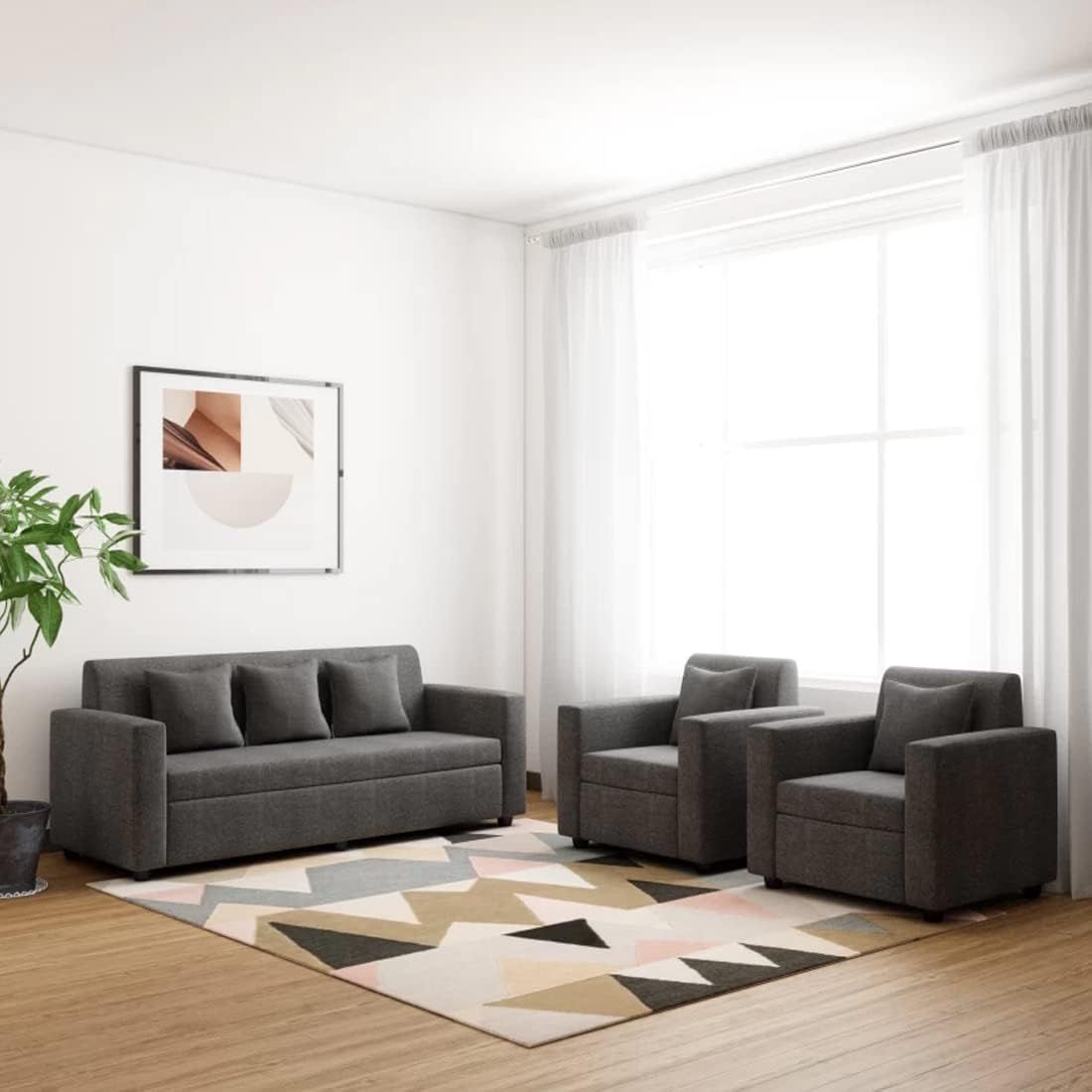
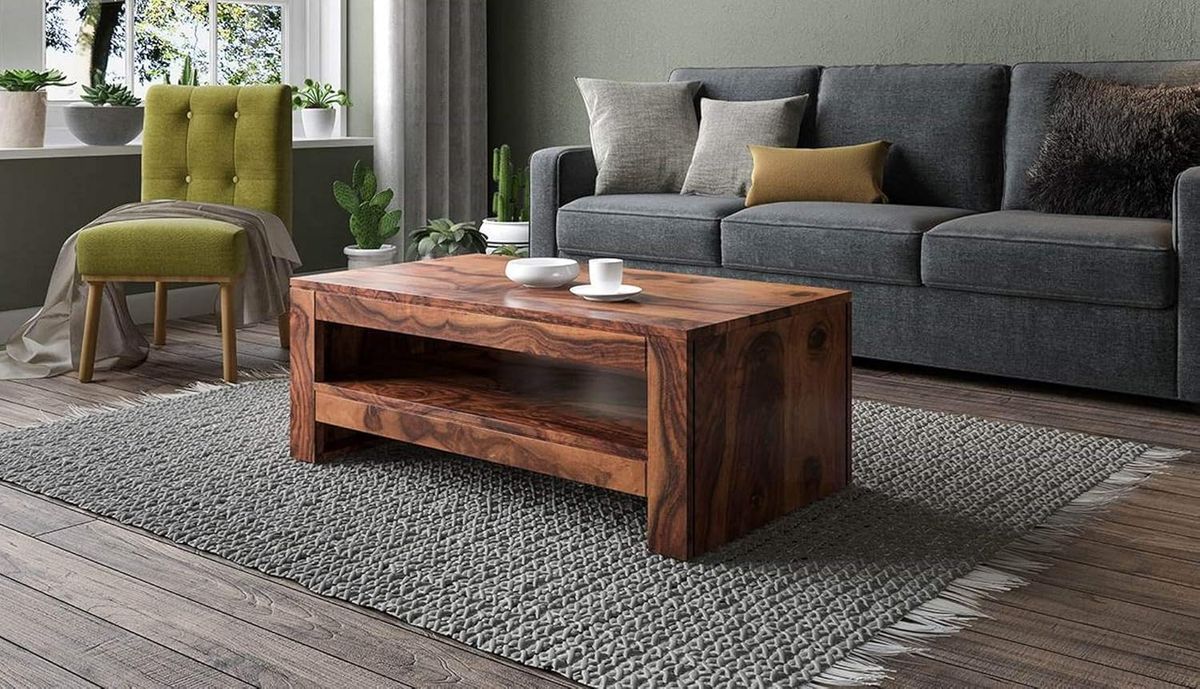
Add roughly ₹3,000–₹8,000 for a matching coffee table and ₹4,000–₹9,000 for a 5×7 ft rug if you're furnishing the corner from scratch — a 5-seater fabric sofa set (3+1+1) paired with a solid sheesham wood coffee table and a 5×7 washable area rug is a sensible mid-range combination that lands well inside the ₹55,000 mark for the full seating corner.
5. Frame matters more than fabric, long-term
Under every sofa is a frame that either flexes or doesn't, and a bad one shows up as creaking and sagging arms long before the fabric wears out.
- Solid wood (sheesham, mango, teak): the most durable, resists humidity swings across seasons — the right call for coastal and monsoon-heavy cities.
- Kiln-dried hardwood: moisture content is controlled during drying, so the frame won't warp as humidity changes through the year — ask for this specifically in humid cities.
- Engineered wood / plywood: fine for budget sofas and lighter use, but check the joints are screwed and glued, not just stapled — stapled joints are the first thing to fail.
- Metal frame: increasingly common in modern minimalist designs, very durable, but check for rust-proofing if the sofa sits near a balcony door.
A quick showroom check that takes ten seconds: sit down and shift your weight side to side. Any creak, wobble, or flex in the arms is the frame talking — a well-built sofa stays silent and solid under normal movement.
6. Colour and maintenance — the decision that ages fastest
Light neutrals (beige, oatmeal, dove grey) photograph beautifully and are the most-bought online — and the least forgiving in a home with kids, pets, or frequent guests, since every mark shows. Mid-tone greys, warm browns, and muted greens hide daily wear far better while still reading as neutral. If you do go light, add a set of velvet cushion covers or cotton cushion covers in a darker accent tone — beyond styling, they take the daily contact wear that would otherwise land directly on the sofa arms and headrest.
Maintenance that actually extends sofa life: vacuum weekly with the upholstery attachment to stop dust from grinding into the weave, rotate and flip loose cushions every two weeks so wear is even, and get a fabric protector spray applied at purchase — most Indian sofa brands offer this for ₹500–₹1,500 and it makes tea and chai stains wipeable instead of permanent.
7. If floor seating fits your space better
Not every living room needs a sofa at all — for a study corner, a reading nook, or a small second living space, a well-built single-seater leatherette recliner can outperform a cramped 3-seater, giving one comfortable dedicated seat instead of a squeezed-in sofa nobody stretches out on. It's also the easiest single piece to add later if the main sofa is already decided.
The one-page checklist
| Check | What to ask or do |
|---|---|
| Foam density | Ask for the number — 32–36 minimum for daily use |
| Frame material | Solid or kiln-dried wood preferred; check joints are screwed, not stapled |
| Fabric vs leatherette | Fabric for daily-use main sofa; leatherette for wipe-clean corners |
| Size vs wall | Tape the full footprint on your floor before ordering |
| Colour | Mid-tone hides wear best; light needs darker cushion covers |
| Warranty | 1 year minimum on frame; ask specifically, not just "warranty included" |
Get the foam and frame right and the sofa will still feel new in year five; get the size right and the room breathes instead of feeling stuffed. Everything else — colour, cushions, throws — is easy and reversible styling on top of a decision that, done properly, you only have to make once a decade.